2025 HACHETTE AOTEAROA NEW ZEALAND
EMERGING DESIGNER AWARD
Tahlia Conrad-Hinga

Tahlia Conrad-Hinga (Kāi Tahu, Ngāi Te Rangi) is a designer, illustrator, and storyteller based in Te Whanganui-a-Tara, originally from Ōtautahi. She specialises in book design, illustration, and creative problem-solving, with a strong focus on Māori storytelling and designing for social impact.
Guided by te ao Māori and pūrākau, Tahlia uses design to elevate Indigenous voices through meaningful narratives and bold, vibrant visuals. Her work is grounded in empathy, creativity, and collaboration to reflect community voices and aspirations. She is passionate about listening to and telling stories that matter.
Tahlia holds a Bachelor of Design Innovation from Te Herenga Waka Victoria University of Wellington, with a double major in Communication Design and Industrial Design.
https://tahliaconradhinga.com
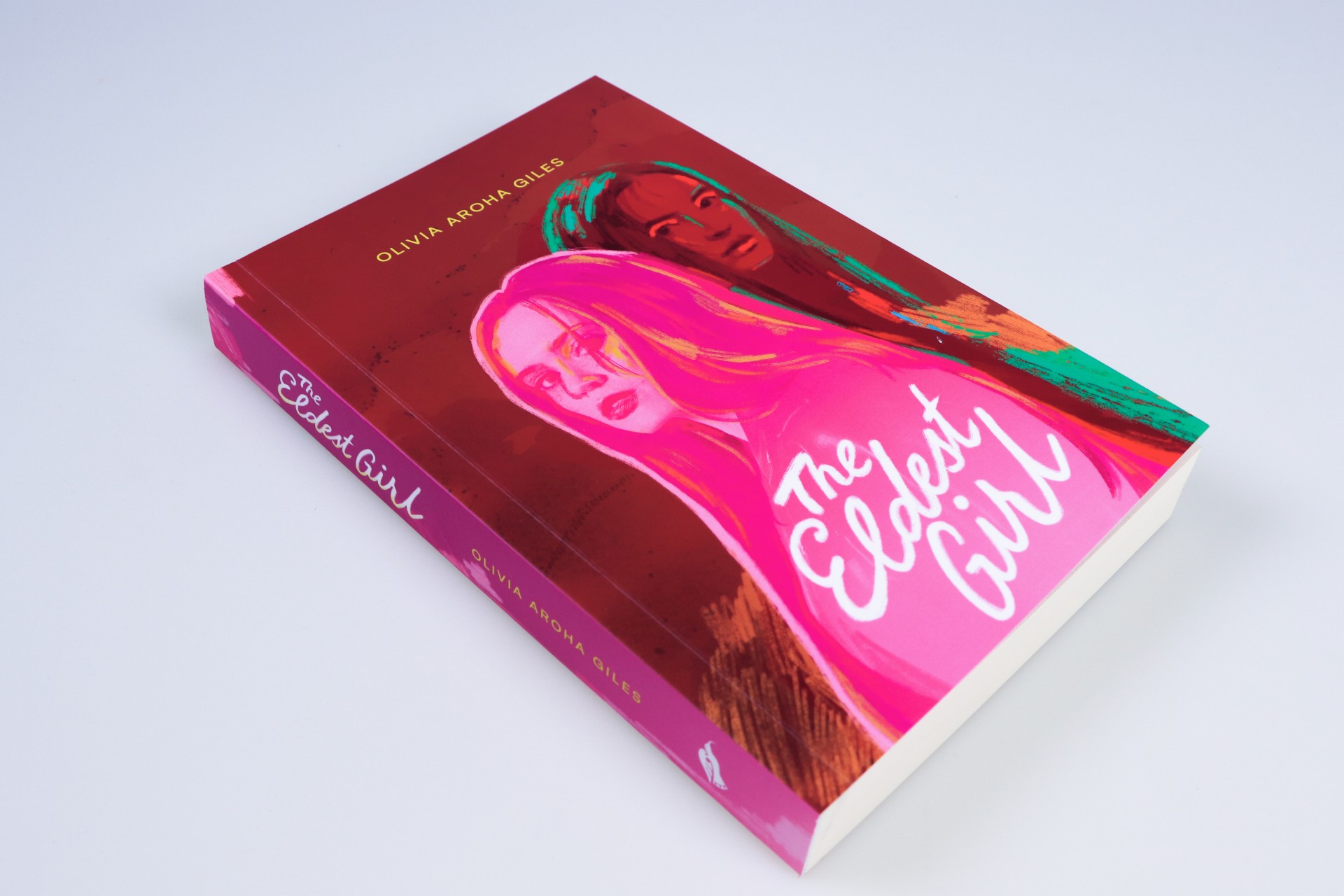
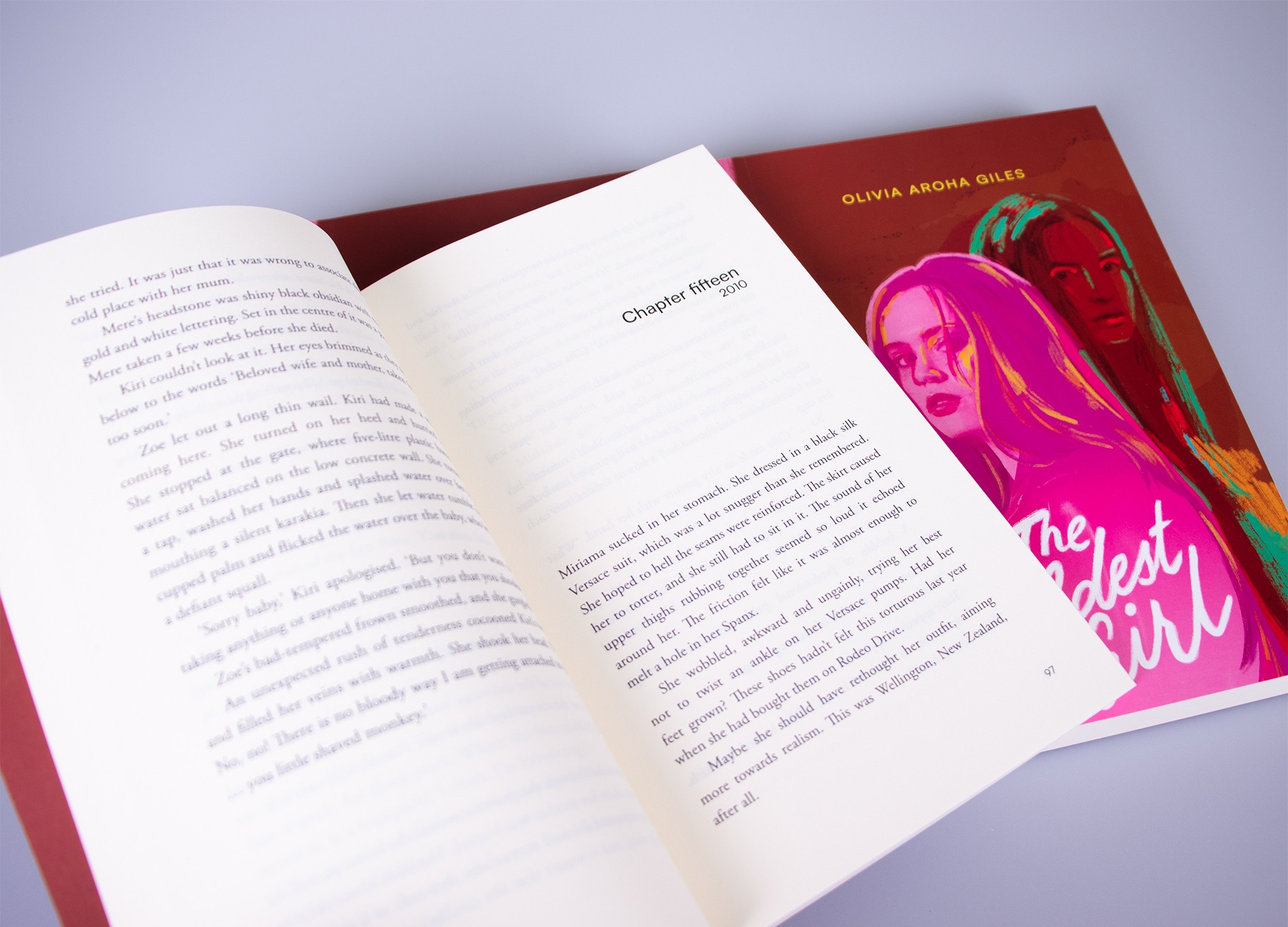
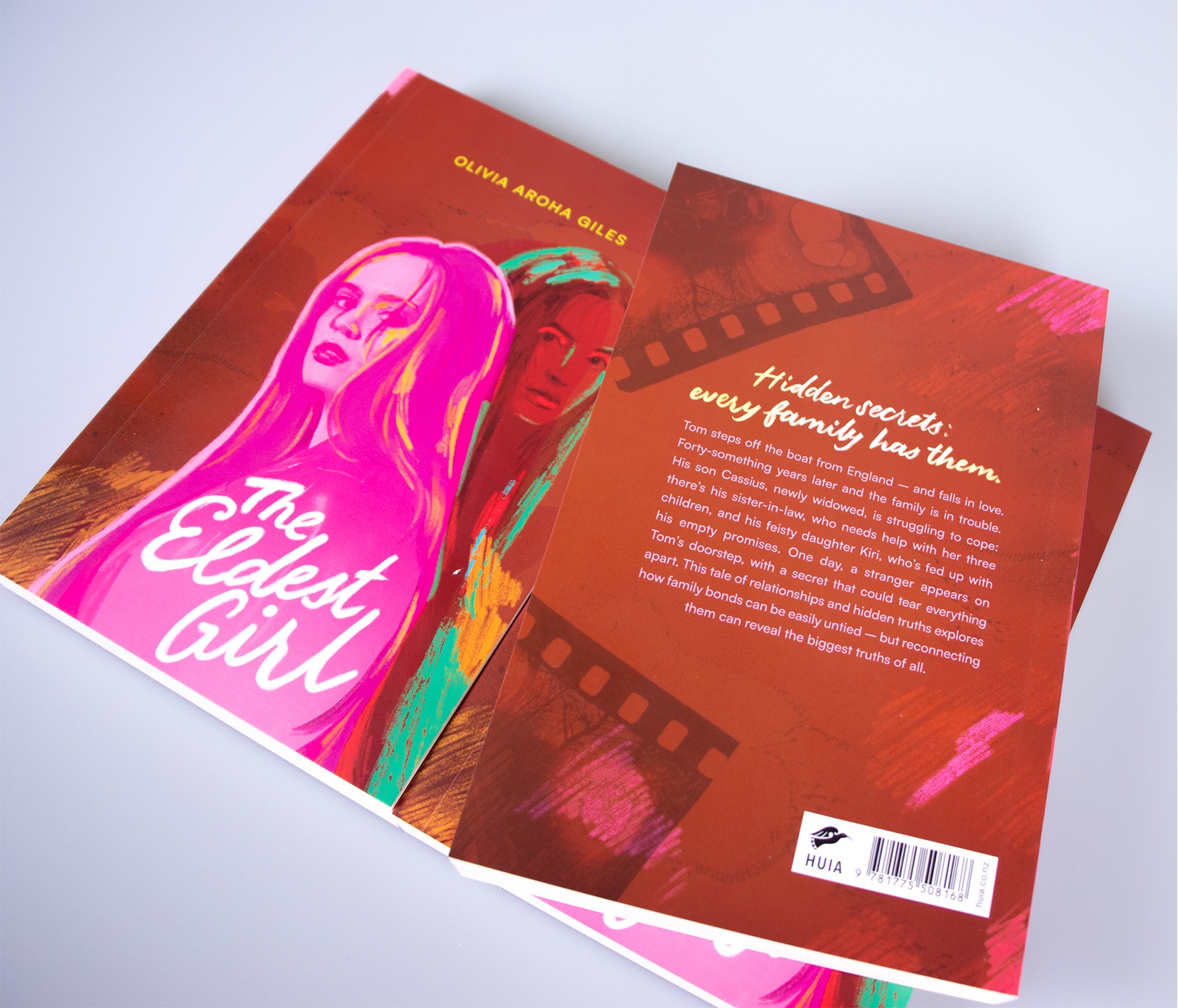
Title: The Eldest Girl by Olivia Aroha Giles
Publisher: Huia Publishers
Design Contribution: Cover Designer
Design Statement:
The cover for The Eldest Girl draws inspiration from the emotive poster design of the 1960s—playful, bold, and richly textured to catch the eye of readers looking for an engaging holiday read. Influenced by the graphic energy of Paul Rand and the layered rawness of Andy Warhol’s Mick Jagger series, the design explores themes of identity, mystery, and emotional distance within a fractured family.
At its centre, two ambiguous female figures emerge elusive and interconnected, inviting the viewer into the story’s core question: Who is the eldest girl? This ambiguity speaks to the hidden tensions and layered identities within the narrative.
Illustrated using a mixed-media process, the imagery was collaged over scans of ripped photographs, burnt film textures, and fluid ink brushstrokes, evoking the grittiness of both the film industry and personal memory. Bright greens, pinks, and oranges echo the aesthetic of 1960s collage design, contrasting vibrancy with emotional weight.
Hand-drawn typography mimics annotated script notes - personal, immediate, and slightly chaotic - while remaining legible and compelling for a broad female readership. This design balances nostalgia with modern edge, positioning the book as both a stylish object and an invitation into a dramatic, cinematic story.

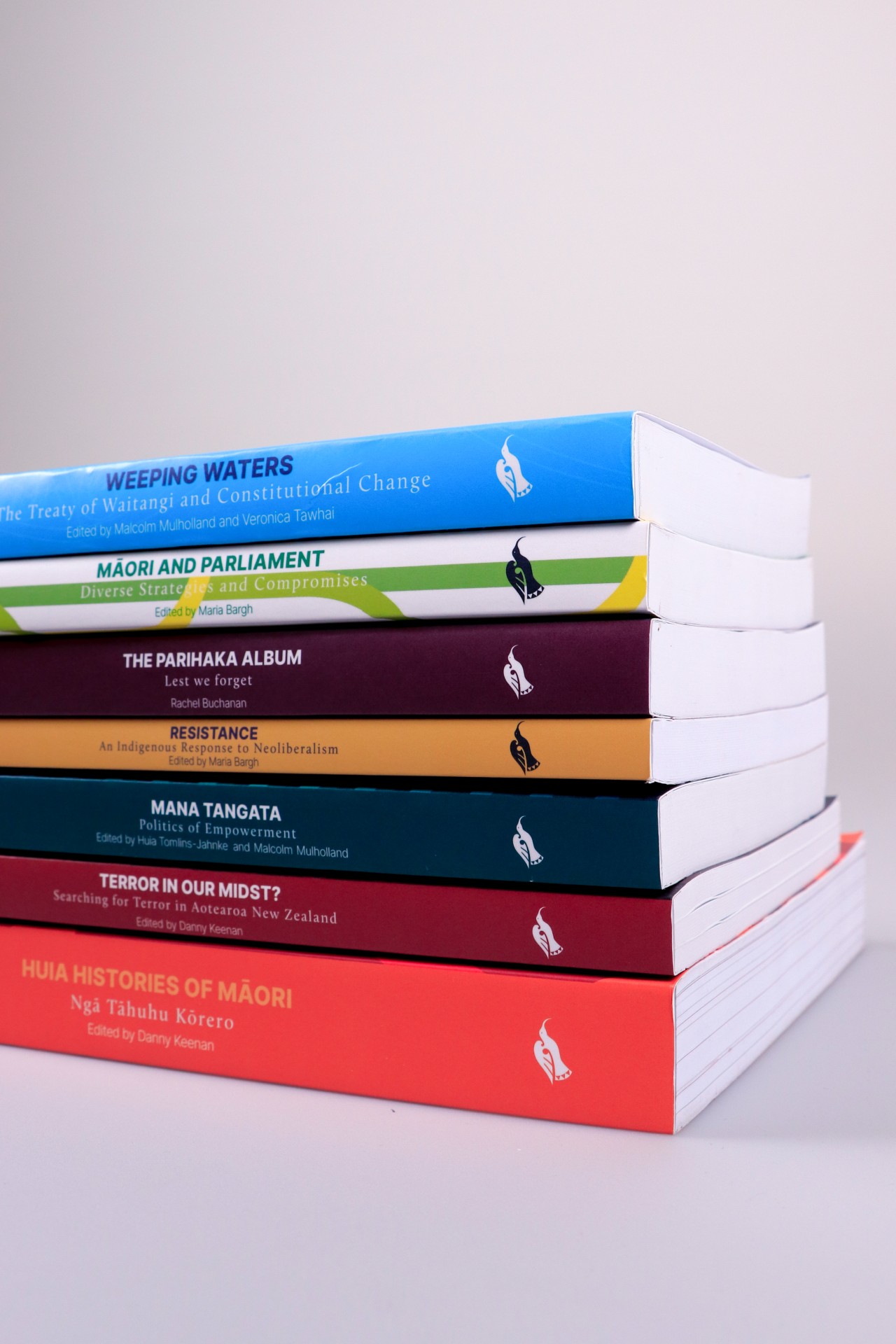
Publisher: Huia Publishers
Design Contribution: Designer all
Design Statement: This series of reprints presented an opportunity to create a cohesive yet diverse visual identity that speaks to both the academic nature of the texts and the cultural significance they hold.
The design concept centres on pattern iconography as the primary visual language. Six base patterns were developed, each inspired by traditional Māori whakairo (carving patterns), and then tailored for each book to create bespoke illustrations. These patterns are symmetrical and repetitive, highlighting toi māori principles of balance, rhythm, and interconnectedness.
Each cover draws on a minimal but impactful colour palette, using two to three key colours that relate to the book’s themes or genre. While colour, scale, and pattern composition vary between titles, consistency is ensured through the placement of pattern, typographic treatment, and the use of block colour in a bold yet controlled way.
Typography across the series strikes a balance between sophistication and modernity. A bold sans-serif typeface was chosen to convey authority without overpowering the visual harmony of the cover. This approach supports the scholarly tone while allowing the illustrative elements to speak to the cultural and thematic weight of each book.
Each pattern was carefully considered to reflect the essence of the book it represents. Some highlight are:
• Māori and Parliament features interweaving rauponga patterns forming tree-like structures, symbolising the nurturing role of Māori within political spaces.
• Weeping Waters uses kōwhaiwhai motifs that evoke water in all its forms—from Ranginui (tears) to Papatūānuku (rivers and lakes).
• Mana Tangata employs whakarare (interwoven patterns) to represent whakapapa and collective strength.
• The Parihaka Album draws inspiration from Taranaki maunga and surrounding waters, using zigzag patterns to echo the land, while the waharoa kopito motif symbolises resilience and growth.
This series brings together visual storytelling, cultural symbolism, and contemporary design, resulting in a collection that is not only cohesive and sophisticated, but also deeply grounded in te ao Māori.


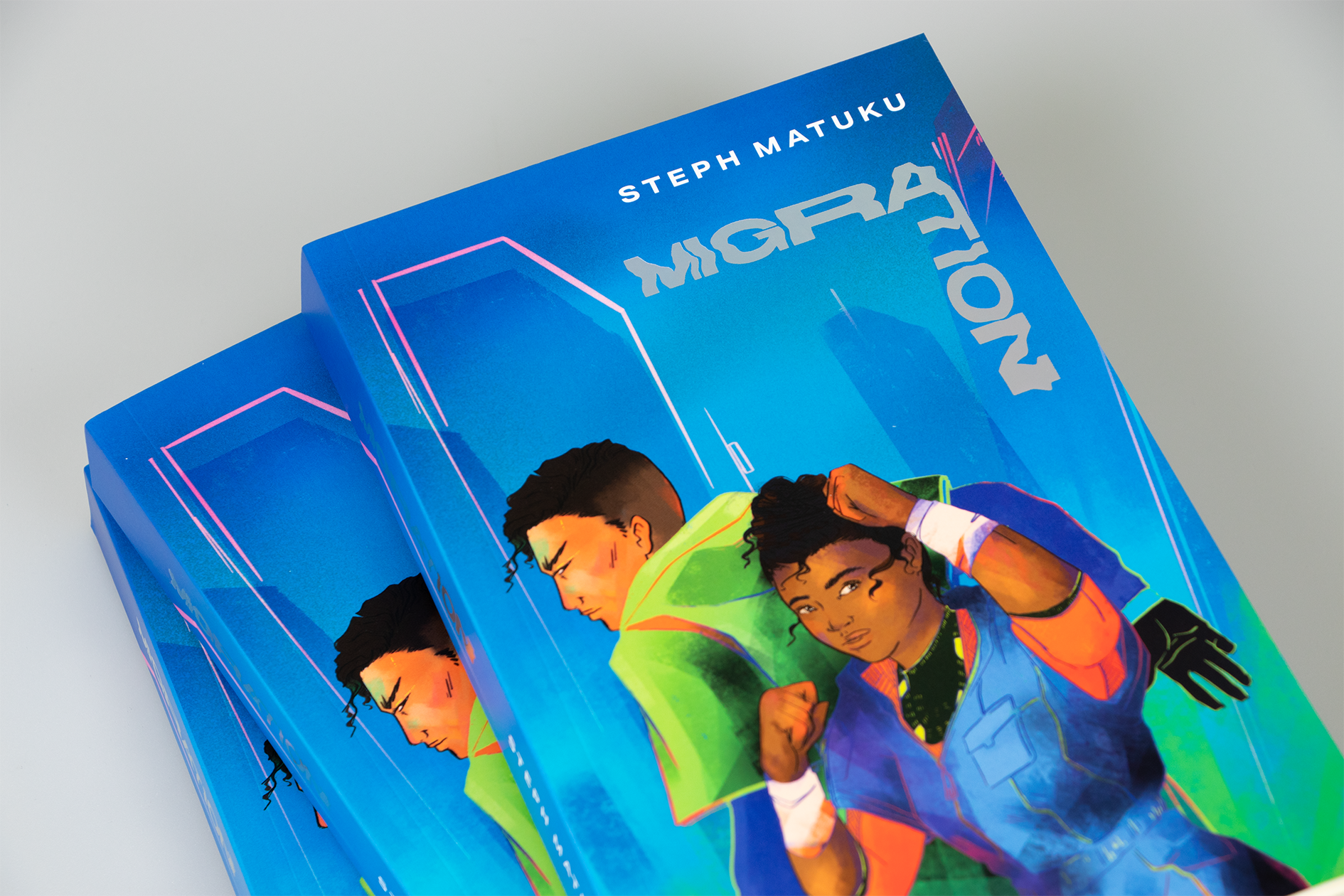
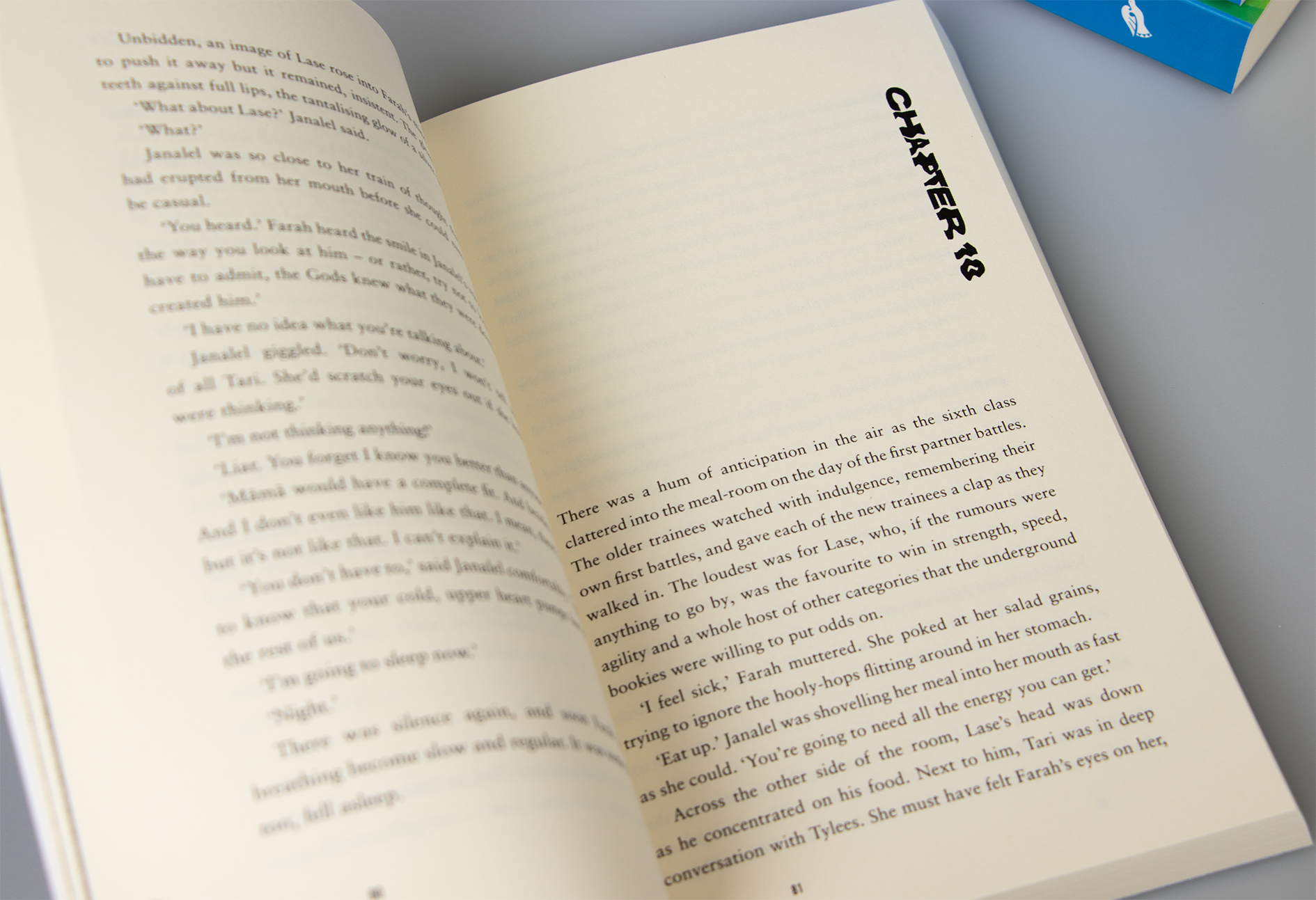
Title: Migration by Steph Matuku
Publisher: Huia Publishers
Design Contriution: Cover Designer
Design Statement: The cover design for Migration reflects the boldness and chaos of the narrative, drawing on 60s sci-fi posters, street art, and the hyper-saturated energy of Takashi Murakami. Mixed-media textures combine with distorted forms to channel the story’s grit and intensity. Farah, with her braided battle hair and headset, stands apart from typical sci-fi leads, visually intense, imperfect, and central to the composition.
Colour plays a critical role: acid greens and electric blues rooted in nature but rendered unnaturally bright evoke the eco-futurist world while hinting at Farah’s psychic unravelling. Holographic spot treatments on the title add a slippery, synthetic feel, reinforcing the uneasy, sci-fi aesthetic.
Typography continues the narrative tone. Chapter mastheads are warped and digitally manipulated to suggest corrupted data streams, while page numbers subtly migrate across spreads, mirroring Farah’s temporal dislocation. Interior blank pages feature dark, noisy textures to reflect the fragmentation.
Together, these treatments create a vivid, disruptive reading experience—where nothing feels fixed, and everything is alive.
[/su_column] [/su_row]